

Stewarding a Purple Martin Colony
Your Rewarding Role as a Landlord
Martins do not need people nearby — they need people involved.

Martin landlords are the species’ frontline conservationists.
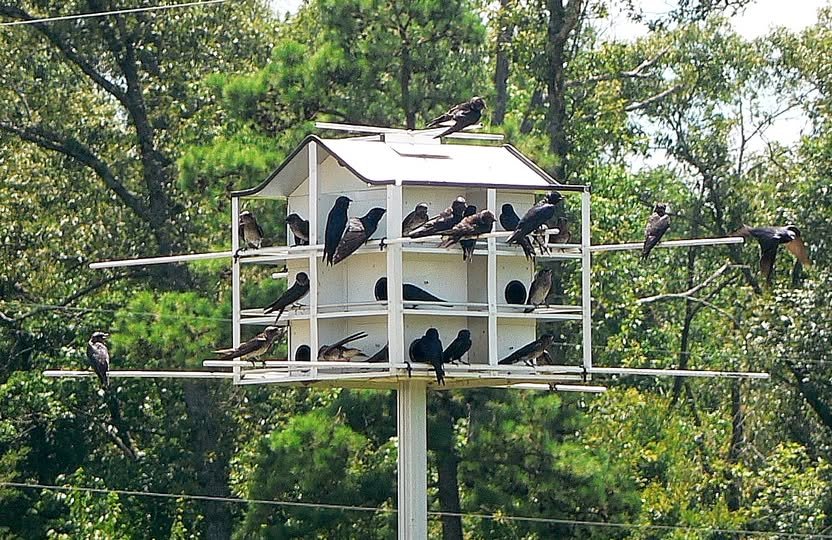
Being a PM landlord has been one of the most rewarding experiences I have had as an avid birder and citizen scientist. Over 20+ years of “PMing” my husband, Skip, and I have had amazing successes (occupancy in the first year, as an example) and heart-breaking failures (the year of the windshear and the summer of the snake attack).
But these amazing neighbors are in our hearts and we only have 8-9 weeks before they return to our yard - so we have lots to do!
1. Commit to Weekly Monitoring
Throughout nesting season (March through July):
Lower housing every 4–7 days
Check compartments for:
Eggs
Hatchlings
Dead nestlings
Blowfly larvae
Moldy nesting material
Wet spots
Monitoring saves lives. Colonies monitored weekly have dramatically higher fledging success.
2. Control Invasive Species
This is non-negotiable.
House Sparrows
Remove nests immediately
Do not allow them to fledge
Trap adults if needed (legal in the U.S.)
European Starlings
Use SREH entrances
Remove nesting material
Downsize openings in very early season
Allowing these species to establish can wipe out an entire colony.
3. Maintain Predator Guards
Install and inspect yearly:
Snake baffles
Raccoon pole guards
Owl guards
Predator-proof porch designs
A single nighttime predator event can destroy a colony in minutes.
4. Clean Out Housing After Breeding
When the last fledglings have left (late July–August):
Remove all nest material
Scrub with a 10% bleach solution or hot water
Repair any warped or damaged components
Lubricate the winch or pole system
Store gourds indoors for winter
Clean housing prevents mold growth and keeps parasites from overwintering.
5. Keep Records
Many martin landlords enjoy:
Tracking arrival dates
Counting eggs and fledglings
Submitting data to the Purple Martin Conservation Association (PMCA)
This data helps track national population trends.
6. Understand the emotional side of stewardship
Being a martin host is rewarding — but it comes with responsibilities:
You will intervene when a nestling becomes ill
Remove dead young
Block invasive species
Help fledglings that fall prematurely
Occasionally provide emergency feeding during cold snaps
This level of involvement is what makes a true martin landlord.
7. Be There Year After Year
Martins return to the same site each summer. Once your colony is established, your consistency matters.
If you stop monitoring, the colony may decline — or be taken over by invasive species.
