

It’s Purple Martin Season!
How Humans Became Essential to Their Survival
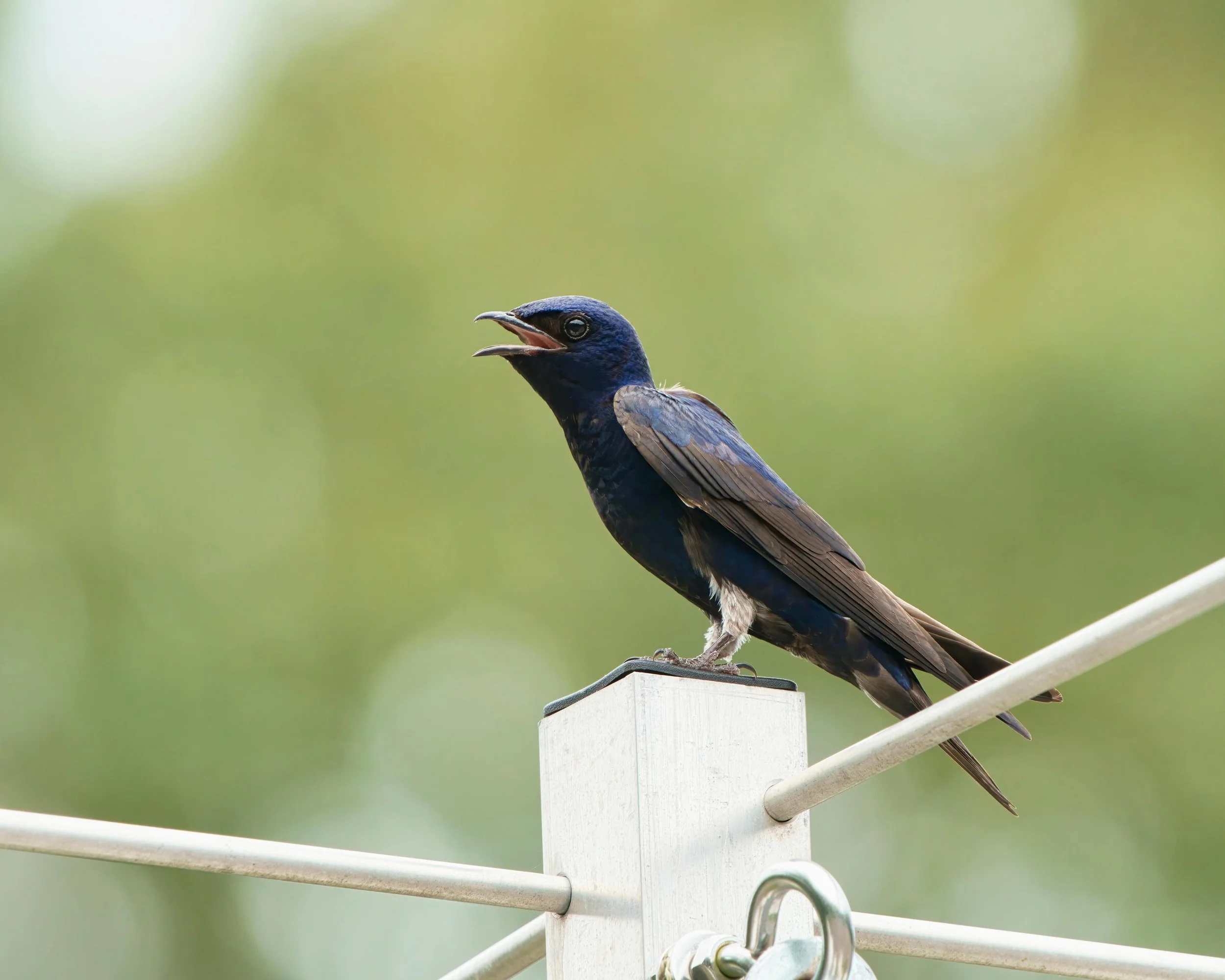
Purple Martins—those glossy, acrobatic swallows that swirl overhead like tiny dark comets—are among the most beloved aerial insectivores in North America. Their liquid gurgles and bubbly chortles have been a soundtrack to summer for centuries. Yet the species’ continued success depends almost entirely on one thing:
Us.
East of the Rocky Mountains, Purple Martins no longer nest in natural cavities. They are now 100% dependent on human-provided housing—a conservation phenomenon unlike any other North American songbird. For bird lovers, this creates a remarkable opportunity: by installing and monitoring martin housing, everyday people can play an outsized role in supporting a species that has placed extraordinary trust in humans.
This partnership didn’t happen overnight. It’s the product of centuries of coexistence, deliberate cultural traditions among Indigenous communities, and modern conservation work. But today, the responsibility is squarely in our hands. And when we get it right, the reward is extraordinary: thriving colonies, healthy fledglings, and the joy of witnessing one of the continent’s most charismatic birds.
This guide explores why Purple Martins depend on us, how to determine whether your property is suitable, and what martins need not just to survive—but to flourish.
A Bird Unlike Any Other: The Unique Relationship Between Purple Martins and People
Most cavity-nesting birds rely on a mix of natural and artificial sites. Bluebirds use old woodpecker holes or nest boxes. Chickadees, wrens, and titmice can improve an old tree cavity or take advantage of a snag or manmade box. But Purple Martins in the eastern U.S. abandoned natural cavities generations ago.
Why?
Indigenous Traditions Started the Shift
Historical and anthropological accounts indicate that Native American communities in the eastern U.S. hung hollowed gourds specifically to attract martins. Martins nested successfully, took advantage of the protection these gourds offered, and learned to associate human habitation with safety. Over generations, the behavior stuck.
Human Settlement Accelerated the Change
As European settlers cleared forests, the supply of old snags and natural cavities dwindled. The martins that survived did so in gourds, barns, or the first “martin houses” crafted from wood or tin.
By the early 20th century, nearly all eastern martins nested exclusively in human-provided structures.
Today: A Species Dependent on Us
East of the Rockies, martins are now effectively obligate house-nesters.
West of the Rockies, they still use natural cavities, but even there, housing provides critical support.
This dependence means Purple Martins are unusually vulnerable—but also unusually receptive to conservation.
If humans do not provide nesting structures, martins have nowhere to raise their young.
Is Your Property Suitable for Purple Martins?
Before installing housing, it’s essential to know whether your habitat is actually suitable. Martins are particular, and unsuccessful attempts discourage both birds and landlords.
The 4 Essentials of Ideal Martin Habitat
1. Open Space
Martins will not nest in tight or cluttered areas. They want:
An open yard or field
30–60 feet of clear space around the housing
A flight path unobstructed by trees
If your yard is heavily wooded, it’s unlikely martins will use your boxes.
2. Nearby Water
Though martins don’t need water directly underneath their housing, they prefer:
Lakes
Ponds
Rivers
Reservoirs
Water = abundant insect life. Housing within ½ mile of open water is ideal.
3. Human Activity (Yes, Really)
While many birds avoid humans, martins gravitate toward areas with frequent human presence. They associate us with safety from predators.
A martin colony is more likely to thrive:
Near houses
In visible areas
With regular monitoring
4. Adequate Height
Most martin poles should be 12–20 feet high. Adjustable poles are essential so the housing can be lowered for monitoring.
Proper Housing: The Foundation of Healthy Martin Colonies
Martins will only stay when the housing is right. And “right” means safe, clean, weather-resistant, and predator-proof.
Types of Housing
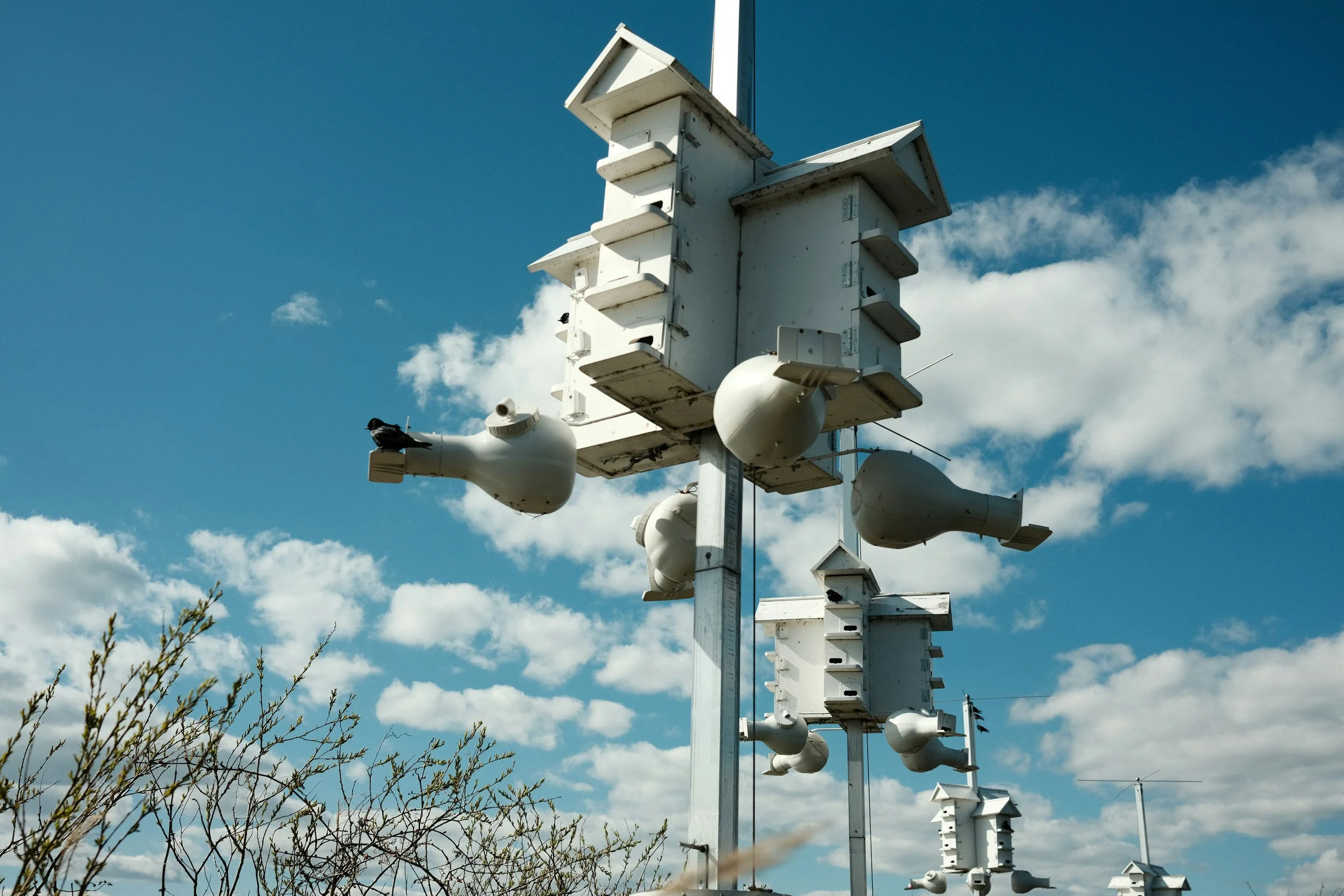
The two most common styles are:
1. Multi-Compartment “Martin Houses”
Often aluminum or UV-resistant plastic, these houses:
Contain multiple rooms
Allow large colonies to form
Are durable and attractive
Can be raised and lowered on a telescoping or winch-type pole

2. Natural or Plastic Gourds
Many martin enthusiasts now prefer gourds because:
They’re cooler
Offer deeper nesting cavities
Reduce competition between pairs
Provide superior ventilation when properly designed
Some setups combine a house with a gourd rack for maximum occupancy and comfort.

(more options available and accessories, click the Amazon button above)
Why Monitoring Is the Key to Survival
Purple Martins face intense competition and predation. Without active, regular monitoring, a well-meaning landlord can accidentally set up a death trap rather than a safe haven.
Monitoring is non-negotiable.
Major Threats to Purple Martin Colonies
1. European Starlings
Starlings are aggressive cavity-nesters known for:
Killing adult martins
Destroying eggs
Attacking nestlings
Taking over entire colonies
Every martin landlord must commit to starling control—especially using properly sized entrance holes.
2. House Sparrows
Perhaps the most dangerous invasive competitor. House Sparrows:
Pierce martin eggs
Kill nestlings
Build nests on top of dead martins
These birds must never be tolerated. Housing should be monitored at least weekly to remove house sparrow nests and prevent establishment.
3. Owls & Hawks
Predators can reach into compartments or cling to housing. Protection includes:
Predator guards
Owl guards
Deep gourds
Porches blocked or minimized
4. Snakes & Raccoons
Both are excellent climbers. A martin pole without a predator guard is an accident waiting to happen.
Install:
Pole baffles
Cone guards
Greased poles (optional but temporary)
A simple predator encounter can wipe out an entire season’s young.
The Importance of Monitoring (and How to Do It Right)
The Purple Martin Conservation Association (PMCA) recommends checking housing every 4–7 days throughout the breeding season.
Here’s how monitoring helps martins thrive:
1. Early Detection of Invasive Species
House Sparrows and Starlings can be removed before they take over. If you only check once per month, it’s likely too late.
2. Remove Wet or Moldy Nest Material
Rain, mites, and parasites can harm nestlings. Monitor and replace damp materials as needed.
3. Ensure Healthy Brood Development
Monitoring allows you to:
Count eggs
Track hatch dates
Follow growth
Identify problems early
4. Prevent Blowfly & Parasite Issues
Blowflies can infest nests and weaken young birds. Early detection means quick intervention.
Is Monitoring Safe for Martins?
Yes. Martins are exceptionally tolerant of human activity. Proper monitoring does not cause nest abandonment—in fact, colonies with regular monitoring are more successful.
Feeding Martins: Should You or Shouldn’t You?
Purple Martins eat exclusively flying insects—dragonflies, beetles, moths, flies, wasps, and more. They do not eat seed.
Some landlords supplemental-feed during cold snaps or when insect availability collapses. This often includes:
Crickets
Mealworms (live or very fresh)
Small pieces of scrambled egg tossed into the air
But supplemental feeding should be:
Temporary
Emergency-based
Carefully done to avoid dependence
For most colonies, providing excellent housing and protection is far more important than feeding.
Migration: A 5,000-Mile Journey Worth Protecting
Purple Martins migrate to the Amazon Basin for winter—an astonishing journey that underscores why every successful nesting season matters.
Their migration challenges include:
Habitat loss in both continents
Insect declines
Severe weather
Collisions with buildings
Exhaustion from long flights over open water
A strong breeding season gives martins a better shot at surviving the long trip.
What Makes a Successful Martin Landlord?
To become a positive force in martin conservation, a landlord must be:
1. Committed to Monitoring
Weekly checks are the single most important commitment.
2. Willing to Manage Invasive Species
This can include:
Removing nests
Trapping
Managing competing species
The goal is always humane, legal management.
3. Patient
New housing often takes 2–3 seasons to attract martins. But once a colony forms, you’ll have loyal tenants for years.
4. Observant
Noticing small problems—loose screws, failing winches, warped entrances—prevents big problems later.
5. Dedicated to Long-Term Stewardship
Successful colonies rely on consistent care, year after year.
The Rewards of Hosting a Purple Martin Colony
For all the work involved, hosting martins is deeply satisfying.
You’ll enjoy:
The cheerful dawnsong of returning adults
The comical clatter of nestlings begging at the entrance
The aerial ballet of hundreds of birds catching insects
The joy of watching families fledge successfully
The knowledge that you’ve genuinely helped a species survive
Purple Martins bond strongly with their nesting sites and will return year after year when conditions remain safe.
Hosting them isn’t just a hobby—it's a conservation partnership.
A Shared Future: Protecting a Species That Depends on Us
Purple Martins have chosen us as their partners in survival. It’s a rare and remarkable relationship—one in which humans have the power to make a real, measurable difference.
If you provide:
The right habitat
Safe housing
Reliable monitoring
Protection from invasive species
Long-term commitment
Then your colony can thrive for generations.
In a world where wildlife often retreats from human presence, martins do the opposite. They come to us. They rely on us. They trust us. Seek out additional information and support BEFORE making the commitment and purchasing martin housing by joining Facebook groups dedicated to purple martin stewardship and joining the PMCA at purplemartin.org
And for those willing to step up, this trust is one of the most rewarding conservation opportunities a backyard birder can experience.
