

Hummingbird Myths, Debunked
Separating Fact from Fiction About These Tiny Powerhouses
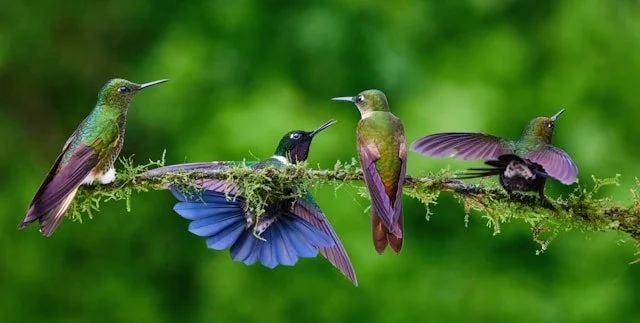
Hummingbirds inspire fascination, admiration—and a surprising amount of misinformation.
Because they’re small, fast, and almost other-worldly in their abilities, hummingbirds have accumulated a long list of myths over the years. Some are harmless misunderstandings. Others, unfortunately, can lead to well-intended actions that actually put hummingbirds at risk.
If you’ve ever wondered whether hummingbirds hibernate, whether sugar alternatives are “healthier,” or if leaving feeders up in fall keeps them from migrating, you’re not alone. Let’s clear the air.
Below are some of the most common hummingbird myths—what’s true, what’s not, and why it matters for the birds. (If you’re new to hummingbird basics like feeding, nesting, migration, and conservation, be sure to start with the RBB North American Hummingbirds guide.)
Myth #1: Hummingbirds Hibernate in Winter
The myth:
Hummingbirds disappear in winter because they hibernate like bears.
The truth:
Hummingbirds do not hibernate—but they do enter a state called torpor.
Torpor is a short-term, energy-saving state that hummingbirds use overnight or during periods of cold weather and food scarcity. While in torpor, a hummingbird’s heart rate, body temperature, and metabolism drop dramatically, conserving precious energy.
This is not seasonal hibernation. It’s a nightly survival strategy.
Most North American hummingbirds migrate south for the winter. A few species—most famously the Anna’s Hummingbird—can overwinter in milder regions of the West and Pacific Coast, relying on torpor during cold nights.
Why this myth matters:
Believing hummingbirds hibernate can lead people to assume they don’t need food in colder weather. In reality, wintering hummingbirds absolutely need reliable nectar sources and insect protein when conditions allow.
Myth #2: Hummingbirds Can’t Fly Backwards
The myth:
Hummingbirds hover, but they can’t actually fly backward.
The truth:
Hummingbirds are the only birds capable of true backward flight.
Their unique ball-and-socket shoulder joints allow them to rotate their wings in a full figure-eight pattern. This lets them hover, fly forward, sideways, upside down—and yes, backward.
That backward motion you see at feeders isn’t falling or drifting. It’s deliberate, controlled flight.
Why this myth matters:
This one is mostly harmless, but it speaks to how specialized hummingbirds are. Understanding their unique flight mechanics helps explain why they need such high-energy fuel and frequent feeding opportunities.
Myth #3: Honey Is a Healthy Substitute for Sugar in Feeders
The myth:
Honey is more natural than sugar, so it must be better for hummingbirds.
The truth:
Honey should never be used in hummingbird feeders.
Honey ferments quickly when diluted with water, creating conditions that promote harmful bacteria and fungal growth. These microorganisms can cause fatal infections in hummingbirds’ tongues and digestive systems.
The safest and healthiest nectar recipe is simple:
1 part plain white sugar
4 parts water
No honey
No brown sugar
No artificial sweeteners
No food coloring
Why this myth matters:
This myth can directly harm or kill hummingbirds. Well-meaning substitutions are one of the most common causes of feeder-related illness.
If you remember only one thing from this article: plain white sugar is best.
Myth #4: Red Dye Is Necessary to Attract Hummingbirds
The myth:
You must add red food coloring to nectar or hummingbirds won’t find your feeder.
The truth:
Red dye is unnecessary—and potentially harmful.
Hummingbirds are naturally attracted to red and orange objects, not dyed nectar. The color of the feeder itself is enough.
Artificial dyes have no nutritional value and may contribute to health problems over time.
Why this myth matters:
Skipping dye is an easy way to reduce unnecessary risks. Let the feeder design do the work, not the liquid inside.
Myth #5: Leaving Feeders Up in Fall Prevents Migration
The myth:
If you don’t take feeders down in fall, hummingbirds won’t migrate.
The truth:
Feeders do not stop migration.
Hummingbird migration is triggered primarily by:
Changes in daylight length
Hormonal shifts
Genetic programming
Not by food availability.
In fact, feeders can be critical during migration, providing fuel for long journeys. Late-season hummingbirds—especially juveniles or stragglers—may depend on backyard feeders to survive.
Why this myth matters:
Removing feeders too early can actually deprive migrating birds of essential energy. Leaving feeders up into late fall (and even winter in appropriate regions) is often beneficial. But keeping the feeders clean and filled with fresh sugar water is essential even when temperratures cool a little.
Myth #6: Hummingbirds Only Eat Nectar
The myth:
Hummingbirds survive entirely on sugar water and flower nectar.
The truth:
Nectar provides energy—but insects provide protein.
Hummingbirds actively hunt:
Gnats
Aphids
Mosquitoes
Tiny spiders
These protein sources are essential for feather growth, muscle maintenance, egg production, and feeding nestlings.
Why this myth matters:
Use of pesticides can severely impact hummingbird health by eliminating their insect food sources and possibly introducing chemicals that can be harmful. A bird-friendly yard isn’t just about feeders—it’s about a living ecosystem.
Myth #7: Hummingbirds Are Fragile and Easily Disturbed
The myth:
Hummingbirds are too delicate to survive human presence or minor disruptions.
The truth:
Hummingbirds are surprisingly tough.
They migrate thousands of miles, endure storms, defend territories aggressively, and survive on razor-thin energy margins. While they are vulnerable to habitat loss and environmental toxins, they are not helpless.
Why this myth matters:
Seeing hummingbirds as resilient partners—not fragile ornaments—encourages proactive stewardship rather than fearful hands-off behavior.
Myth #8: Hummingbird Feeders Cause Dependency
The myth:
If you feed hummingbirds, they’ll become dependent and forget how to find natural food.
The truth:
Hummingbirds do not become dependent on feeders.
They instinctively forage for flowers and insects and will move on if a feeder disappears. Feeders supplement natural food sources—they don’t replace them.
Why this myth matters:
Fear of dependency can discourage people from feeding hummingbirds at all, reducing valuable food sources—especially during migration and extreme weather.
Myth #9: You Should Stop Feeding During Cold Weather
The myth:
Cold weather means hummingbirds shouldn’t be fed.
The truth:
Cold weather makes feeding more important, not less.
Hummingbirds burn enormous amounts of energy to stay warm. In regions where hummingbirds overwinter or during unexpected cold snaps, feeders can be lifesaving.
Some even live at altitude during the summer months. I fondly remember the tiny Calliope Hummingbirds that frequented the feeders at a lodge on the way to Mt Evans, outside of Denver at an altitude of over 10,000 feet.
The key is proper maintenance: keeping nectar from freezing and changing it frequently.
Why this myth matters:
Cold doesn’t stop hunger. Reliable food sources can make the difference between survival and starvation.
Myth #10: All Hummingbirds Migrate South Together
The myth:
Hummingbirds migrate in large flocks at the same time.
The truth:
Hummingbirds migrate individually, often on slightly different schedules based on age, sex, and local conditions.
Adult males typically migrate first, followed by females and juveniles weeks later.
Why this myth matters:
Understanding staggered migration helps birders recognize that late-season hummingbirds aren’t “lost”—they may simply be young birds following their own timeline.
But hummingbird migration is still fascinating. Consider the Rockport Hummingbird Festival every September in Texas. It’s an amazing experience.
Why Busting Hummingbird Myths Matters
Hummingbirds live on the edge of survival, balancing extraordinary energy demands with delicate ecosystems. They are among the tiniest birds in the world and there are over 360 different species of hummingbird in the Western Hemisphere. Misinformation—even when shared with good intentions—can disrupt that balance.
By understanding what hummingbirds really need, we can:
Feed them safely
Support migration
Reduce accidental harm
Protect habitat
Become better stewards
If you’d like a deeper dive into hummingbird natural history, migration patterns, feeding strategies, nesting behavior, and conservation, be sure to read our North American Hummingbirds guide—it’s the foundation of this entire cluster.
One Simple Way You Can Help Hummingbirds Today
Keep feeders clean and filled with proper nectar
Leave feeders up during migration
Avoid pesticides
Plant native flowering plants
Share accurate information
Sometimes the best conservation tool isn’t a product or a donation—it’s knowledge.
And when it comes to hummingbirds, the truth is often just as amazing as the myth. 💚
